
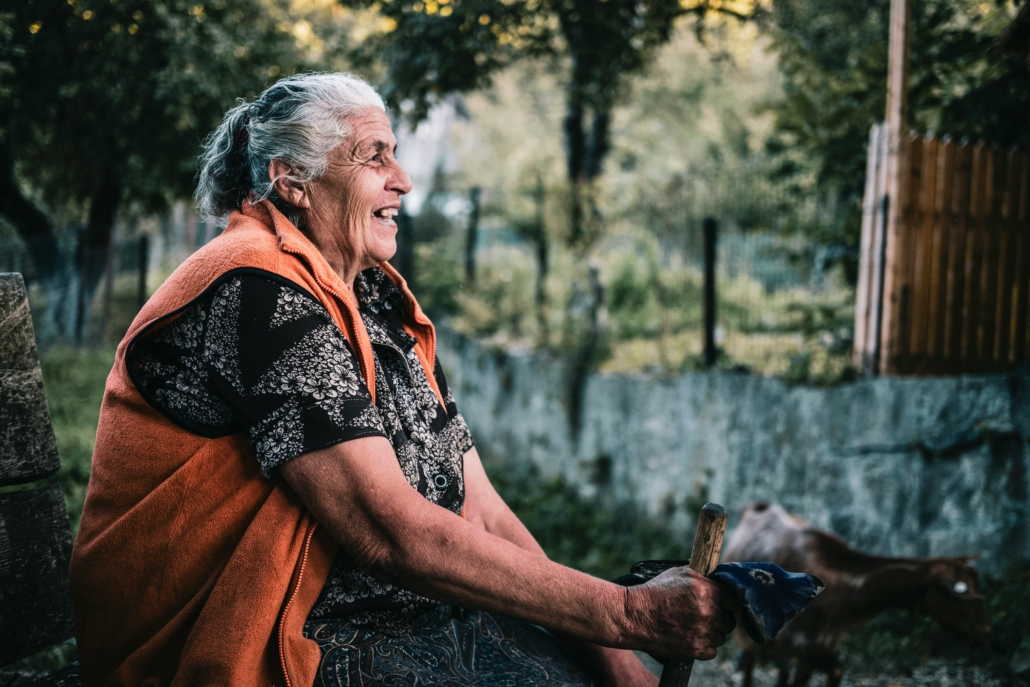
 Visiting Romania can feel like traveling to two separate countries. On one side, urban, rapidly advancing cities such as Bucharest and Cluj are thriving. On the other side, poverty and stagnation affect rural communities and smaller towns.
According to the Brookings Institution, more than 25% of the population lives on less than $5.50 a day. This problem worsens because most affected individuals live in rural regions, where 75% of the population experiences poverty. Many of the citizens lack drinkable water and children struggle to maintain a well-resourced education; 40% of the children in Romania cannot read or write at a functional level, and one in five children drop out of school entirely. Romania’s communist roots in the mid-20th century account for much of the country’s persistent poverty.
Romania’s Escape From Communism
Communist leaders imposed centralized control over Romania after World War II. Nicolae Ceaușescu became ruler in 1965 and oversaw the forced industrialization that contributed to severe poverty and repression, according to Local Histories. The Romanian Revolution in 1989 ended the regime and Romania transitioned toward a market economy. This shift continues to influence innovations in poverty eradication in Romania.
This transition proved difficult because the communist regime directly controlled many key industries. With the collapse of these industries, many small-to-medium cities relying on these industries stagnated. Eventually, through liberalization, privatization and political reform, Romania improved economically. Romania’s acceptance into NATO in 2004 and the EU in 2007 marked a turning point for citizens, but it also revealed gaps in development and social justice. This felt especially true for many of the children living in vulnerable populations.
Community-Driven Change
In 2014, to address the extreme poverty that families in Romania experienced, Foundation Botnar partnered with UNICEF and the Norwegian and Romanian Governments to develop a pilot program in 45 communities in the Bacǎu region. Their solution, the Minimum Package of Services (MPS) model, aimed to expand Romanian children’s access to necessary services and improve their educational outcomes.
An innovation in poverty eradication in Romania resulted from the digital platform Aurora, which efficiently organizes and evaluates data for the MPS model. A trained team consisting of a social worker, community nurse and a school counselor used this platform to collect data on each of the family’s needs.
The program’s nontraditional approach to social change delivered many benefits:
- Data-Driven: The integration of Aurora made the MPS model more effective by offering evidence-based guidance for supporting children and families within the social welfare system. Aurora further allows for the clear visualization of data, making the model scalable and replicable across communities and regions.
- Cost-effective: Preventative measures such as reducing school drop-out rates, limiting family separation and increasing immunization coverage lowered long-term spending for governmental agencies.
- Community-focused: Families often struggled to navigate the complex welfare system. This program removed many of those barriers by providing comprehensive guidance and support to households, preventing vulnerable families from falling through the cracks.
- Holistic: To maximize the program’s impact, teams exchange information through strong horizontal (inter-community) and vertical (national–county–community) communication. The program also prioritized comprehensive training, equipping teams with skills in data analysis and project planning.
Impact of the MPS Program
UNICEF conducted independent evaluations in 2017 and 2019 to determine the effectiveness of the program. The 2017 report found a decrease of 20% in households with children at risk of domestic violence and estimated costs fell under $46 USD per child. Furthermore, the 2019 evaluation reaffirmed its cost-effectiveness, determining that the cost per person for the MPS model was one-third for active cases and one-eighteenth for closed cases compared to similar projects funded by European programs.
By strengthening community-based services and emphasizing prevention in health, education and social protection, this initiative set the standard for innovation in poverty eradication in Romania and across Europe.”
– Sachin Kapoor
Sachin is based in Atlanta, GA, US and focuses on Technology and Solutions for The Borgen Project.
Photo: Unsplash
The post Innovations in Poverty Eradication in Romania appeared first on The Borgen Project.